Showing posts with label Kokonainen Festival. Show all posts

Tuesday, 30 March 2021

Recording Minna with RSO

 Two days of recording DONE! Feeling super happy to have been given the opportunity to record my piece “Minna-Pictures from the Life of Minna Canth” with the amazing musicians from the Radio Symphony Orchestra ! This was my first “Kantanauha” (“Archiv Recording") EVER! 🤩 


Feels also special that such an amazing experience was my last “in person” event here in Finland for a while! Because *drumroll for announcement* in three weeks I will be moving to GERMANY for a one year artistic residency in Bamberg (Bavaria)!! 🤩

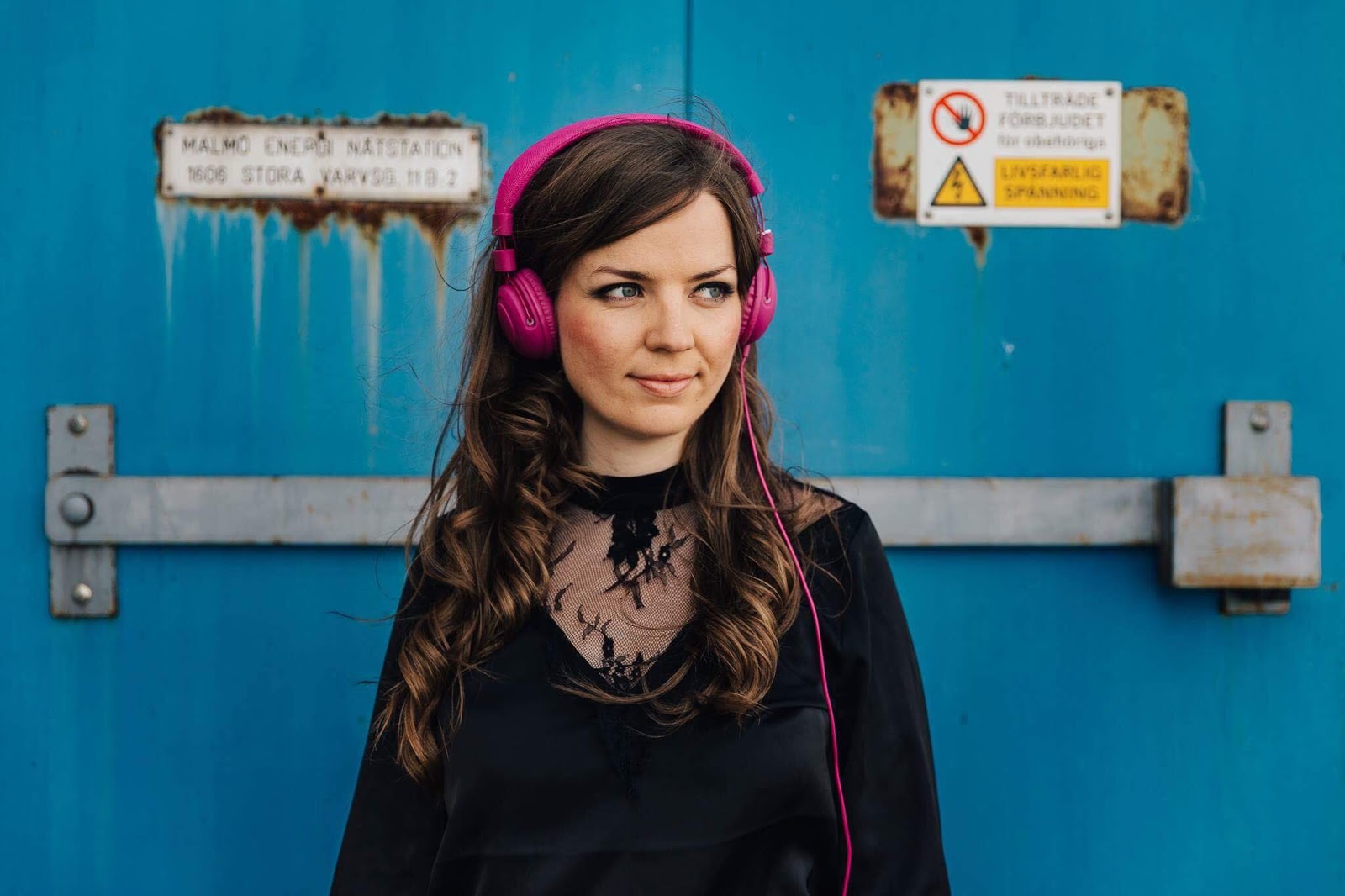
Composer Cecilia Damström


So if you know anybody who would like to rent my furnished two-room flat in Helsinki (Taka-Töölö) from May to March, let me know! 😅

Monday, 8 March 2021

Some thoughts on International Woman's Day!

Happy International Woman's Day!

International Woman's Day is a slightly "different" concert day compared to other concert days. Why? Because this is usually the only day in the year where you are likely to come across concert programs consisting of only female composers, while all other days of the year it is the norm to come across concert programs with only male composers.

If you would make every week a concert, and only this week included female composers, that is more or less also what the statistics for the world would be, around 1.9 percent. According to a survey of the 22 largest American orchestras, women composers accounted for only 1.8 percent of the total pieces performed in the 2014-2015 concert season. In the last years the numbers have gone slightly up, so maybe like adding a second all female concert on Mother's Day.

After knowing these not so encouraging numbers, it is therefore heart warming to see everyone who is trying to bring change. Thank You!

Thank you to 
Kokonainen
 for making concert series striving for equality. Thank you to the founders and artistic directors 
Linda Suolahti
 and 
Mari Viluksela
 for keeping up this wonderful work for already 5 years now! Thank you to 
Hbl - Hufvudstadsbladet
 and 
Wilhelm Kvist
 for questioning these norms and lifting these uncomfortable discussions up to light, and asking the questions about representation. Thank you to the research association 
Suoni ry
 , which seeks to advance musical practices and music research as a site for societal discussions. Thank you to the Swedish organisations 
KVAST
 and 
Konstmusiksystrar
 who have have had an enormous impact on that the Swedish music scene for the better. Thank you to every single person and organisation, who is working for a more equal concert music scene. Thank you! ❤️

Very happy to this year be performed in an online concert by 
Den akademiska damkören Linnea
 conducted by the fantastic 
Merete Ellegaard
. This concert consists of compositions composed by both women AND men, just as it should be, today and also all other days of the year. We are in this together. ❤️

The piece "hjärteblad" is the third movement of my cycle "Vidkänning", composed to amazing poems by 
Henrika Ringbom
 and can be heard at the very end of the concert (at 58:25 min). If you understand Swedish, I of course strongly recommend you to listen to the whole concert!😍

https://youtu.be/BKX6dUh9nc8?t=3504 


Composer Cecilia Damström. Photo by Marthe Veian 2017.


Thursday, 14 January 2021

Jury work for Musequal

This week I have had the honour to work as the chairperson of jury for the Musequal Composition Composer Competition! It is truly so humbling to get the opportunity to know so many fantastic pieces from composers all around the world and such a joy to be part of this amazing listening experience! 😍Thank you to each and everyone who entered the competition! ❤️ The sad thing is course doing something so unnatural as putting music in some kind of “order” where only some are chosen. Sad but those are the rules of the game. 

Big thank you still to the other jury members, we have a great list of finalists! Tomorrow the results will be out! 🤩

Photo by AJ Savolainen


Tuesday, 4 August 2020

Helene - Nuances from the Life of Helene Schjerfbeck

My third piano quintet “Helene” Op.74  is the last quintet out of a trilogy consisting of three large form works with the theme “Woman’s Destiny”. The trilogy is a three-year commission by the Kokonainen Festival in Finland. The first quintet “Minna” was premiered at the festival in 2017 and the second quintet “Aino” was premiered at the festival in 2018.
The third quintet “Helene – Nuances from the Life of Helene Schjerfbeck” will get its world premiere this year on the 7th of August at the Kokonainen Festival 2020. It will be played by the incredible musicians Heli Haapala flute, Kristiina Salmi oboe, Pekka Niskanen clarinet, Jaakko Luoma bassoon and Tiina Karakorpi piano. As the name says, it is a selection of nuances and feelings from the life of the painter Helene Schjerfbeck (1862-1946). Schjerfbeck is one of Finland’s most famous modernists.
The art of Helene Schjerfbeck has been dear to me since I was a child and I painted my first copy (for own use) at the age of 12. In addition to loving her art I also felt a strong understanding and belonging to her as a person, as she throughout her life suffered from health problems and partly therefore was mostly melancholic and depressed. She never married, painted all her life and finished her last painting just one week before her death.
Balskorna / Dacing Shoes by Helene Schjerfbeck

Schjerfbeck grew up under hard circumstances in a Swedish-speaking family in Helsinki. She got a hip injury at the age of four which contributed to that she would sit still a lot of the time, and probably therefore she dedicated a lot of her time to drawing. She was accepted to the Finnish Art Societies Drawing School at the mere age of 11 years and was granted a free place at the school. After she had completed her studies in Finland she continued with the help of grants her studies in Paris and England. She often recollects in her later letters that these years were the happiest of her life. In a letter from 1918 to Einar Reuter she writes “In my youth there was hope and love towards the work, it was fun to paint, the only fun thing at all – the time in Paris and the first year in England. Then in Finland there was no hope anymore, no joy, all that contributed to that I won’t say here.” In the first movement “Balskorna” (“Dancing Shoes”), named after a painting with the same name from 1882, I try to catch that joy of life. She returns to the motive of “dancing shoes” several times during her life, as she does to the happy memories from her time in Paris and England.
While abroad Schjerfbeck got engaged to an English painter,  They was engaged for two years before her fiancé broke up the engagement, probably because of her poor health. She burnt all his letters and she also asked her friends to burn all of her letters that considered him. Therefore we don’t know today who her fiancé actually was. The burning of all letters can also be heard in the first movement. In the 1920s she comments that through the broken engagement she knew what pain was, but that she was happy about that she had been able to choose art over all the duties she would have had as a wife.
Byktork / Drying Laundry by Helene Schjerfbeck

Although she didn’t have to fulfil any duties as a wife, she still had to fulfil her duties of housekeeping. A lot of time and energy went to sweeping and washing the floors, cutting wood, lighting the fire, washing clothes, cooking and washing the dishes. As she was weak and sick most of her life, these duties robbed even more of her energy and limited the time she had left for painting. In a letter to Einar Reuter from 1932 she writes “They laugh at me when I say I have had a lot to do – I clean up, wash the dishes, cook food at times, sew clothes, mend all the clothes, and that is a lot, and every now and then I correct a painting — If I sit down to paint there will come bills, never a calm moment. If only I could be free from the household!
In general everything that is considered to have to do with women’s daily lives has been classified as unimportant and uninteresting. Therefore it is not surprising that a female artist would make a painting such as Schjerfbeck´s “Byktork” (“Drying Laundry”) from 1883. It is a motive that probably no male artist would have chosen. In the same way as Schjerbeck illustrates the female everyday life with her art, I feel that as householding took such a large part of her time and energy, it is essential to dedicate a quarter of this piece exactly to laundry. In a letter from 1922 to Reuter she summarizes her wishes with the words “I am not looking for fame but for money – because with money I get the possibility to paint more, and that is more than fame and honour to me.”


Schjerfbeck is maybe best known for her around 40 self-portraits. She writes in a letter to Ada Thilén in 1921: “When I now so seldom have energy to paint, I have begun with a self-portrait. You always have the model at hands, it is just not at all fun to see yourself.” She was also encouraged by the art dealer Gösta Stenman, who was her patron and made sure to both sell her paintings and create a financial independence for her. In two different letters from 1937 to her friend Reuter she comments on this “I am weak – but I am beginning on the self-portrait that Stenman wants to have.” and “Isn’t it strange that he still keeps on wanting to have self-portraits!”. She liked to investigate the different options she had and writes in a letter to Dora Estlander in 1944 “I’m looking at a book with painters self-portraits. They who embellish themselves are boring – Dürer and also others.” In 1921 she writes to Reuter “I drew in front of the mirror, after 5 minutes the face falls together tired. It will be continued tomorrow…This is the one life, an other hidden current is one’s own real one.” This own real one she always seemed to look for in all of her art. The third movement “Sjelvporträtt” (“Self-portraits”) is a passacaglia consisting of 12 chords. Everytime the chord progression is repeated it is instrumented slightly differently, with different nuances. The first four chords are also the main ingredient in the first and last movements and parts from self-portraits can be heard in the second movement, when she is longing to paint
Konvalescenten / The Concalescent by Helene Schjerfbeck

The last movement “Konvalescenten” is named after one of her famous painting “The Convalescent” from 1888 which is also often called  “The Pearl of Ateneum” (the Finnish National Art Gallery). The motive is one of Schjerfbeck´s most used motives (in addition to her self-portraits). The painting was exhibited at the Paris Exhibition in 1889 (that time with the name “The first greenery”) and won a bronze medal of first class. The Convalescent can be seen as a contribution to the public debate, a tribute to Louis Pasteur’s discoveries of infectious diseases and their cures. The original title however seems to refer to an awakening after a winter or a disease and appears to be a belief in the future. The paining has also been interpreted by many as a sort of self-portrait, an insight and introduction to a new phase in her painting and that she finally felt liberated from the broken engagement. It is also speculated if she returned to the motive so often due to suffering a lot from her hip injury, and also her being ill during a large part of her life, and thus being a convalescent herself. But since she was a shy person and has not spoken about this topic, all this remains only as speculations.

Monday, 3 August 2020

Two Premieres This Week

Monday, the beginning of a exciting week and also an exciting month! This week two world premieres, 20 minutes each!

Both are also going to be live streamed, so no need to risk getting Covid19 even if you want to hear it! If you can’t go to the music, music will come to you instead! 😍

Friday it’s the fifth anniversary of the amazing Kokonainen Festival! At this years festival my latest piano quintet “Helene - Nuances from the life of Helene Schjerfbeck” for flute, oboe, clarinet, bassoon and piano will get it’s world premiere.

It will be performed by the amazing musicians Heli Haapala (principal flute in Lapland Chamber Orchestra ), Kristiina Salmi (oboist at the Finnish National Opera), Pekka Niskanen (principal clarinet at the Lapland Chamber Orchestra ), Jaakko Luoma (solo bassoonist at Tapiola Sinfonietta) and Doctor of Music Tiina Karakorpi! Friday 1PM in Janakkala Church .

On Sunday at the final concert of Pellinge Musikdagar my new song cycle “Framtidens skugga” to texts by Edit Södergran will get its world premiere at 3PM! It will be performed by the legendary world known mezzo soprano Monica Groop accompanied by the also highly acclaimed pianist Juhani Lagerspetz, both also professors at the Sibelius Academy.

Big thank you to all the grants that have made the making of these pieces as well as the performances of them possible! Thank you Taike for supporting “Helene” to come to life as well as The Finnish Cultural Foundation for supporting both my work as well as the wonderful Kokonainen Festival! Thank you Majaojasäätiö for supporting the work of writing the new song cycle “Framtidens skugga” and Svenska Kulturfonden for supporting the beautiful festival “Pellinge Musikdagar 6-9.8”. Thank you Yle Klassinen for broadcasting these events!

Wishing you all a great week as well! 😘🌸
Photo from 2018 by the one and only Marthe Veian

Monday, 20 July 2020

August Concerts 2020

New week, new project! Was great to take four days off and just enjoy the Finnish archipelago! 😎🌸Now looking forward to be working on a new orchestra piece for the first time since over two years! Oh, and August is soon here with four super exciting concerts including my music!

•7.8.2020 World Premiere of my new 20 minute Quintet “Helene - Nuances from the Life of Helene Schjerfbeck” at the superb Kokonainen Festival

•9.8.2020 World Premiere of my new 20 minute song cycle “Framtidens skugga” for Monica Groop at her festival Pellinge Musikdagar Pellingin Musiikkipäivät

•25.8.2020 My 30 minute “Requiem for our Earth” for choir, tape, light and video projection will be performed at this years UNM Tampere 2020: Music Ecology Festival in Tampere, being one of the representatives for Finland

•29.8.2020 My first and second Piano Quintets “Minna - Pictures from the Life of Minna Canth” and “Aino - Emotions from the Life of Aino Sibelius” will be performed at Tallinn Music Week 2020 by the amazing group TampereRaw .

Fingers crossed that Covid19 doesn’t come and postpones all the fun once again!


Thursday, 29 August 2019

Anniversary of Letters!

Exactly one year ago my second string quartet "Letters" was premiered by the amazing Brodsky Quartet at the wonderful Stift International Music Festival in Holland! Thank you once again Daniel Rowland - violin for this amazing commission and opportunity!
Since then Letters has been performed by Lapland String Quartet and at the festivals such as Musik vid havet / Meri ja musiikki (Music by the Sea, Inkoo), Kokonainen (Janakkala) and last week twice at the Tampering Festival (Tampere).
The version by Tampering ensemble is in Aamulehti's live stream available for subscribers until Friday. But I now share with you this video of last years world premiere by the Brodsky Quartet available for everyone! Hope you enjoy!


Saturday, 29 September 2018

Intense Concert Week Ahead

In about one weeks time "Sof godt!" for mezzo soprano, baritone and orchestra will get it's world premiere on the 8th of October at 6PM in Vaasa City Hall! The piece will also be performed in the Schauman Hall in Jakobstad on the 9th of October and in Helsinki at the old concert hall of Sandels Music Institute on the 11th of October, both concerts at 6PM!

In exactly two weeks time my second piano quintet "Aino - Emotions from the Life of Aino Sibelius" will get it's Swedish premiere in the Berwald Hall in Stockholm on the 13th of October at 1 PM!

For this reason I would like to share the recording of the last movement "Iron" from Aino, recorded at the world premiere last June at the amazing Kokonainen Festival! Please have a listen!

All concerts, just as the streaming of this recording, for free!

Monday, 28 May 2018

Aino - Piano Quintet No. 2

My second piano quintet “Aino” Op.60 is also the second quintet out of a trilogy consisting of three large
form works with the theme “Woman’s Destiny”. The trilogy is a three-year commission by the Kokonainen
Festival in Finland. The first quintet “Minna” was premiered at the festival in 2017 and the last quintet
Helene” will be premiered at the festival in 2019.


The second quintet “Aino - Emotions from the life of Aino Sibelius" will get its world premiere this year on
the 8th of June at the Kokonainen Festival 2018. It will be played by the incredible musicians Heli Haapala flute, Pekka Niskanen clarinet, Linda Suolahti violin, Lauri Angervo cello and Tiina Karakorpi piano. As the name says, it is a selection of feelings from the turbulent and fascinating
life of Aino Sibelius (1871-1969). She was the sister of three artist (the writer Arvid Järnefelt, the
painter Eero Järnefelt and the composer Armas Järnefelt) but she is best known for her being the
wife of the Finnish composer Jean Sibelius.

Aino around the time of her marriage (photo from c. 1891 / National Board of Antiquities Picture Archive)


Aino Sibelius was in opposite to Minna Canth very hard for me to understand as a person and
also at an emotional level, which means that I have worked very hard on this quintet “Aino”. As Jenni Kirves concludes in her book “Aino Sibelius - Ihmeellinen olento” (freely translated into
English by me):
“Aino Sibelius truly was a wondrous being. The secret of her persona will always remain a mystery
to us, no matter how hard we try to get to her core. As a human she was of her own class, a special
and contradictional woman, who at the same time was modest and strong, but within her strength very
sensitive and sometimes soft, even weak. Her personality is hard to categorise. Even in her time she
was considered to have a special character, which was hard to understand for many. From today’s
perspective it feels even harder. The women of today maybe find it even harder to identify themselves
with her persona than the women of her time. In this sense she was a artist in the same way as her
husband.

The easy way out would be to analyse Aino from today’s feminist perspective as a person who
sacrificed her own persona for her husband’s music. However she never experienced that she
had done so, instead she felt uplifted by her husband’s music and to be part of something infinite
and holy, and she saw herself as a privileged person. The persona of Aino Sibelius therefore can’t
be put into the context of today’s view of equality. Aino didn’t feel repressed because for her it was
self-evident that the woman is a woman and the man is a man, who both live according to their
nature. It wasn’t a question of repressing or being repressed, she thought women were meant to
use their own strength and men their own, and in this way they would fulfill their own path decided
by destiny.”

Even though Aino has been very difficult for me to understand, I still wanted her to be part of my

trilogy “Woman’s Destiny” because without her dedication to her husband and to their family we
would maybe (most likely) not have so many works by Jean Sibelius. Even Jean Sibelius
acknowledged how lucky he had been to marry Aino and said in his speech on Aino’s 75th
Birthday You might have been happier and better off marrying another man, but I could never have been happier with anyone than with you”.


The first movement “Rakkaus” (Love) is what kept their marriage together even through very turbulent
times and the severe alcoholism, which Jean Sibelius suffered from. Aino and Jean felt that they had
found a soulmate in each other and loved each other deeply. Even after having been married for years
they seemed to be newly in love and Aino has also been called “the genius of love”.  She wrote about
their marriage “I am happy that I have been able to live by his side. I feel that I have not lived for nothing. I do not say that it has always been easy – one has had to repress and control one's own wishes – but I am very happy. I bless my destiny and see it as a gift from heaven. To me my husband's music is the word of God – its source is noble, and it is wonderful to live close to such a source.


Repressing her own needs was a great part of Aino Sibelius’ life, even if she saw it as her duty to do so.
The second movement “Höyry” (Steam) is about repressing and controlling herself, while “steam was
coming out from her ears”. Having six daughters with a man who suffered from alcoholism, and his
travelling a lot for his work, and his spending a lot of nights away from home drinking, it must have
been such a strain on their marriage that it is hard to imagine how Aino made it through those times.
But when Aino was angry at her husband she would not shout at him, she would sulk in silence for
days or even weeks at a time.


But even during hard the times of their marriage, Aino Sibelius always missed her husband very much
when he wasn’t at home, which the third movement “Kaipaus” (Longing) is about. When the Sibelius
family got a radio set at home,  she got some comfort from hearing his music and concerts being
broadcasted, she felt closer to Jean through his music. After his death she lived for another 12
years in which she missed him tremendously. Aino would every evening read his scores in bed,
just to feel that he was a bit closer to her, for a little while.

Rautaa” means iron and I feel that was what this woman, Aino Sibelius, was made of. The small and
fragile woman Aino had so much willpower and dedication to her life task and destiny that all I can do
is admire her. Aino Sibelius’ life was anything but easy: being the wife of an alcoholic artist who is
supposed to have said “I’m a poor man with a rich man’s habits”, which would lead to financial distress. Moreover their third child Kirsti died from typhoid
fever at the age of two (in 1900), Aino’s sister Ellen committed suicide one year later. Aino lived
through both of the world wars and the Finnish civil war. All of this is more than most people
could endure in a lifetime, but Aino did.