Showing posts with label Tampere Biennale. Show all posts

Thursday, 18 April 2024

Wasteland Finnish Premiere


Last week my 20 minute orchestra suite, my own “Rite of Spring” got its Finnish Premiere by the fantastic Tampere Philharmonic and Olari Elts in my beloved Tampere, where I studied and lived for almost a decade! Once again I have needed a whole week to recover from this wonderful and overwhelming experience. So happy I got to share the concert with so many friends and family! 

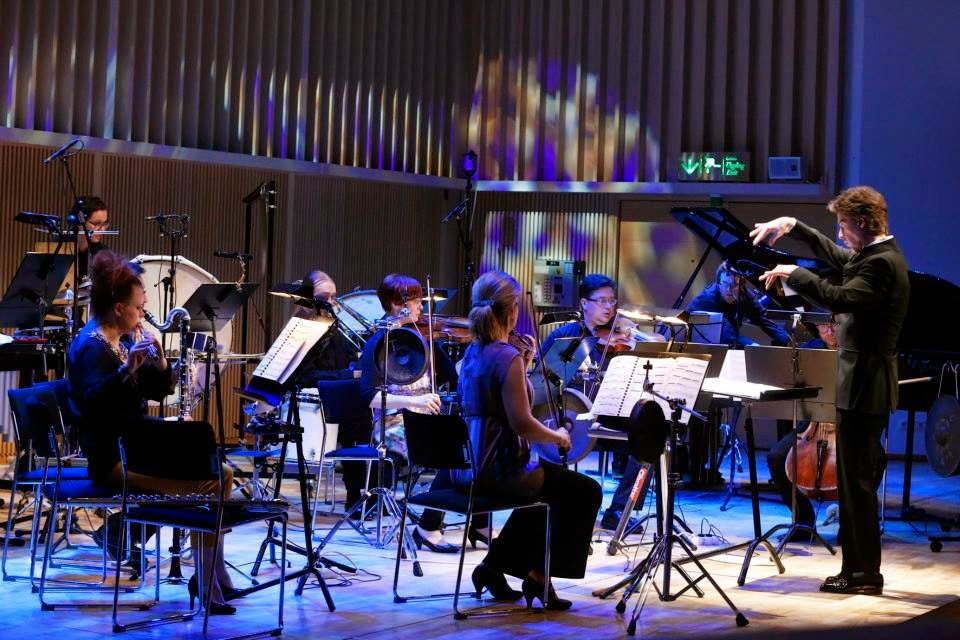
Cecilia Damström with Tampere Philharmonic and Olari Elts. Photo by Maarit Kytöharju for Tampere Biennale 2024.


Wasteland is a piece composed about how the recycling industry works a.k.a doesn’t work well enough yet. In this piece we follow the recycling process of three pieces of clothing from usage, to tossing, sorting, burning and handling of the ashes (and green washing). Obviously, in a piece about recycling I am recycling different pieces of music, representing a piece of clothing each, everything from Für Elise to the Magic Flute and from Catholic Mass Chant to Finnish pop artist Maija Vilkkumaa’s “Ei”.


So happy that the concert was reviewed by three different critics! As my aim is to make people think and feel through my music, I found the review by Aamulehti quite intriguing: It is simultaneously easily approachable and irritating music. 


Jari Kallio wrote for Adventures in Music following:


The opening movement, Wear, comes off as hyperactive Academic Festival Overture, as Damström presents us with a hectic party montage, featuring orchestral costume changes at increasing speed. In the course of the two ensuing movements, Toss and Sort, used clothes are transferred to large sorting halls via an Andante orchestral transportation. At the end of the ride, the ensemble pans out with piled layers of repetition, mounting to vast tutti canvases and gazing upon the sheer mass of waste. Furioso furnaces are lit in Burn, conjuring up symphonic auto-da-fe par excellence. In the concluding Flow the orchestra sails down the river of greenwashing, rendering its final parody before vanishing beyond the horizon.


Conceived with meme-like wittiness and inventive instrumental craft, Wasteland is both fun and serious, its musical designs being both accessible and thought-provoking, without succumbing to fast fashion takes on the Berio Sinfonia (1968-69). Performed with dedication and zeal by the Tampere Philharmonic under Elts, Wasteland was given a powerhouse Finnish premiere.”  


If you want to make up your own opinion, the concert is available world wide for an other three weeks (until the 12th of May) on the Finnish Broadcasting Company’s website Yle Areena. My Wasteland begins at 17 min, although I warmly recommend listening to the whole concert including music by Kalevi Aho, a world premiere by Eetu Lehtonen and a fantastic virtuoso Piia Komsi singing music by Unsuk Chin!


Listen here!


Tuesday, 7 April 2020

How Covid-19 Changed my 2020


This picture was taken exactly five weeks ago after I had given a guest lecture about my music at Malmö Academy of Music, a week during which I was working as a jury member for the new composition student admissions for my former university. How much life has changed since then!
Four weeks ago on Monday the 9th of March I flew home from Malmö, departing from Copenhagen airport. I was one of the only ones using a face mask at the airport, and happily unknowing my timing was quite perfect, travelling about 5 days before Denmark made a one month travel ban.
Since then all my concerts and events have been cancelled or postponed. I was looking forward to giving a speak about political music at Tampere Biennale's composer seminar, to hear my string quartet Via Crucis be performed at Heta Music Days in Lappland, to hear the wonderful conductor Christian Reif perform my piece Lucrum with W and last but not least: making my Australian debut with my piece Tundo! played by the Melbourne Symphony Orchestra conducted by Håkan Hardenberger. In total 14 concerts with my music cancelled (so far). 
More over I started to have slight flu-like symptoms fours days after my travel and went into voluntary quarantine on Friday the 13th of March. The first 8 days I had not much fever (about 37.8°C), hardly any cough, just a little sore throat, some muscle pain, nausea and headaches and a lot of tiredness all the time. On day 9 my breathing difficulties started, which over time have become less but still not seized (now day 26 in total). I was twice checked up but as I'm not in the risk group, I wasn't tested for COVID-19. 
But despite this all above I feel I have been very lucky and am at good spirit. I'm in a privileged position considering work, as nothing has changed so far - working from home as usual. As soon as I'm able again, I will be working on a new piece for violin and piano for the one and only Pekka Kuusisto and Tarmo Peltokoski, can't wait!
My warmest thoughts are with all my friends in the different cultural fields as well as in other fields (for instance restaurants) who lost several month of work due to the pandemic. My thoughts are also with all the brave and hard working doctors and nurses out at the front line under enormous pressure and and endangering their own lives. And my sincere condolences to all who have lost loved ones to COVID-19.
Just wanted to give an update whats been going in my life and that I'm okay! Sending you all lots of love and hope! Take care!😘

Saturday, 12 April 2014

Tampere Biennale Day 4 (Part 2: Lecture Concert II, Music and Darkness & Klubi)


Saturday April 12th. At 19.00 the second lecture concert called Music, Mathematics and Everything took place in the Tampere Cathedral.

“Professor of Space Astronomy Esko Valtaoja and organist Susanne Kujala will discuss the fascinating historical ties between music, mathematics and astronomy, with intriguing insights into the development of Western music and science.”

TampereRaw and Uusinta ensemble. © Maarit Kytöharju


The programme was:

Esko Valtaoja – speaker, Susanne Kujala – organ, Veli Kujala – electronics, TampereRaw, Uusinta Ensemble
Olli Virtaperko: Dawkins (2007-2008)

I Kopioitujat (Replicators)

II Kohti monimuotoisuutta (Toward Polymorphism)

III Ikuiset kierteet (Immortal Coils)

13'-15'
Vincenzo Galilei: Dialogo (1568)
Johannes Kepler: Sfäärien harmonia (1609)
Juhani Nuorvala: Prélude non retouché (2012)

Veli Kujala: CybOrgan (2012)

I –UM

II On the Strand of Remoteness
III Warp
21'


Duration approximately 90 min, no intermission.
TampereRaw and Uusinta ensemble. © Maarit Kytöharju

Tampere Cathedral is a very nice place for having concerts; it is very big, has a long echo and is decorated by one of the most famous Finnish artists Hugo Simberg. The only minus I can think of is that the wooden benches are very uncomfortable, so I found it quite hard to sit the whole 90 minutes without an intermission. I didn’t find this lecture as interesting as the first lecture about language and music.

Juhani Nuorvala, Susanne Kujala, Esko Valtaoja,
Veli Kujala and Olli Virtaperko
© Maarit Kytöharju

After this concert we hurried with my composer friend Dante Thelestam to the Music Hall of the Old Library House to hear the second concert by Kairos Quartett called Music and Darkness. I was actually really tired and had a headache (because it had been such a long day) but the concept of this concert was so intriguing that I “had” to go! And I’m glad I went!

“The second recital of the Kairos Quartet will present an anti-statement to the visual theme of the festival, as „In iij. Noct.”, the Third String Quartet of Austrian composer G.F. Haas, lasting about one hour, will be performed (and heard) in complete darkness.”

The programme was:
Georg Friedrich Haas: String Quartet no. 3 „In iij. Noct.” (2001)

Duration approximately 60 min, no intermission.

The hall was absolutely cramped full of people, because this is a rarity you don’t get to hear often. The reason it is performed so seldom are easy: it’s very hard for the quartet to learn this contemporary piece by heart and you can’t look at your fellow musicians at all, and it’s hard to find a venue where it is possible to get complete darkness. Because not everyone feels comfortable in complete darkness we were prepared for the concert by an introducing 3 minutes of absolute darkness in silence. After the 3 minutes the lights were dimly lit and people who felt uncomfortable were asked to leave now, because during the next 60 minutes that is not an option. I think no one wanted to leave the room.

It actually was an absolutely amazing feeling sitting in complete darkness, I can’t remember ever having been in such a place. It felt weird closing and opening my eyes as it was the whole time as black anyway. And the way you were “forced” to listen was also interesting, you had no other option than just listen 100%. (But the dark room and the headache were also challenging me with a non-electable second option: sleep.) I can’t actually say if I liked the piece or not, but still it has left a very big imprint on me and is one of the most memorable concerts I have ever been to.

After the concert I went with Dante to Klubi for the last gig of the evening. Dante only stayed four half an hour before taking the 23.06 train back to Helsinki. Apparently most other visitors from Helsinki also took that train because Klubi was quite empty and there were only few people I knew, which isn’t that common on the last evening club gig of Tampere Biennale…

Stringpurée Band © Cecilia Damström


The programme for Klubi was
21.00 Humus
22.00 Stringpurée Band
23.00 
Lauri Porra Band
Lauri Porra Band © Maarit Kytöharju
Lauri Porra © Maarit Kytöharju

So after midnight when the gig was over people started heading home and I was also thinking of heading home. But the night ended late as usual.

Tampere Biennale Day 4 (Part 1: Music and Language & Portrait of a Woman)


Saturday April 12th. The day began splendidly with a good review in today’s paper Aamulehti (read the translated version here).

This was the longest day at Tampere Biennale this year, including four concerts (of which two also were lectures at the same time) and a gig at Klubi.

At 12 o’clock Dante and I hurried to the first event of the day, Music and Language, at the Music Hall of the Old Library House.

The programme was
Janne Saarikivi – speaker, Eija Kankaanranta – kantele, Susanne Kujala and Veli Kujala – accordion, Uusinta Ensemble
Timo Alakotila: Ilmari 24 (1st movement of String Quartet no. 1) (2010)
Iamus: Colossus (first performance in Finland) (2012)
Asko Hyvärinen: valse griffyre (2002)
Max Savikangas: Geeniparanneltu Väinämöinen laulaa kyborgi-Joukahaisen lumeavaruuden mustaan aukkoon (Gene-enhanced Väinämöinen sings cyborg Joukahainen into the black hole of virtual space) (2006)

“Is there a shared basis for different forms of communication? Professor of Finno-Ugric Languages Janne Saarikivi and the Uusinta Ensemble will explore points of contact between music and language in this lecture-concert that will include a hilarious modernised image of Väinämöinen, protagonist of the Finnish national epic, courtesy of composer Max Savikangas.”

Janne Saarikivi at Tampere Biennale 12.4.2014. © Maarit Kytöharju


It was a very interesting concert where the speaker Janne Saarikivi made a lot interesting points about both the connections and differences between language and music.

I was very happy when I noticed there was Alakotila in the programme. He is my godmother’s husband so I was looking forward to seeing him but unfortunately he couldn’t come. (He is touring a lot, so he was probably in some other city or country playing a concert him self.).

Iamus was a piece for solo piano performed by Väinö Jalkanen. I actually thought the piece was quite alright. We were then told that the piece actually wasn’t written by a person but by a “piece generator” (a programme) called “Iamus”. So the whole piece was constructed by a computer. Saarikivi was talking a lot about what the piece worth is to us and if the worth increases/decreases depending on if we think it’s a human or a computer who has composed it. Well, I have to conclude that the piece at least was played by a human, which is a very important thing I think.

My absolute favourite piece in this concert was Max Savikangas’ composition. It had so much cool things going on. While the intensity grew the players began standing up one by one until the whole ensemble (including the cellist!) were standing! It was a great way to end the concert!

Max Savikangas 12.4.2014. © Maarit Kytöharju


After the concert my friends Dante and Väinö came for lunch to my place. Väinö was happy to be in the company of two Swedish speaking Finns, because he always enjoys practising his Swedish (and therefore also speaks good Swedish). Väinö told us surprising facts like that the library in the Liszt Academy in Budapest is much better than the library of Hanns Eisler School of Muisc in Berlin. But he told us that the librarian in Hanns Eisler is really friendly and when Väinö wanted to play a chamber music piece by Feldman, she ordered the score to the library. But Väinö wasn’t in town (Berlin) for about half a year, still, the next time he entered the library (about 7 month later) the librarian said “Mr Jalkanen, the score you once wished for has arrived, just so you know.” He then borrowed the score and playd the piece together with his friends in two contemporary music concerts in Lapland.

After lunch I headed to the Student Theare for the concert Portrait of a Woman. The concert was actually almost sold out, but I managed to get a free ticket from my friend, English horn player Heikki Pöyhönen, who was playing in the concert.

The programme was:

TampereRaw, Tuomas Turriago - conductor
Riikka Talvitie: Mies – miekka vyöllä (2008)
Lotta Wennäkoski: Suka (2008)
Minna Leinonen ja Heta Kuchka, Hildegard von Bingen: Naisen muotokuva (2013)
Duration approximately 80 min, intermission included.

Naisen Muotokuva [Portrait of a Woman] by composer Minna Leinonen and video artist Heta Kuchka combines music, video, light and performance art, exploring the artistry of women in three historical eras. Works written by Lotta Wennäkoski and Riikka Talvitie for the Taiteilijoiden Kalevala [Artists’ Kalevala] project will also be performed.

I really liked the concert in general and there was a nice and intimate feeling about the concert (as the Student Theatre is a quite small place). There was an intermission after Wennäkoski and in the intermission I happened to meet Perttu Haapanen in the coffee queue, so I introduced my self and thanked him for his great piece in yesterdays concert and told him that I liked his orchestration. I was quite astonished and flattered when he replied “oh well congratulations to you too on your good review, I read the paper on the train this morning.”

Portrait of a Woman at Tampere Biennale
© Maarit Kytöharju

Minna Leinonen’s and Heta Kuchka’s Portrait of a Woman left the biggest imprint on me, maybe because it was  music and visual art combined. In the piece the audience was surrounded by the ensemble and the venue was quite dark all the time. Women dressed in white dresses came up on stage, one of them started hanging up white washing. I hadn’t read the programme beforehand and was quite surprised about how Leinonen portrayed these very naïve and passive, dreamy household women, but this was a deliberate choice, as the commission had been given to enlighten people about female artists position in the 19th century. The whole concert ended so that the women in white lit real candles and came and stood around the audience and stared at us and at last blew out the candles so that we all were left in complete darkness. It was absolutely beautiful (in a slightly grotesque way).

Portrait of a Woman at Tampere Biennale 12.4.2014 © Maarit Kytöharju


The fact that there are only three female composers (not counting Matilda and me, as we are only students in a student production) in the whole festival and that all female composers are put into one concert called “Portrait of a Woman” is somehow quite obscure. Someone commented quite accurately “Somehow this makes me think of sports where women and men are competing in different leagues… which shouldn’t exist in music.”

All the women with in the project "Portrait of a Woman" including
Heta Kuchka (in black) and Minna Leinonen (in red) 12.4.2014.
© Maarit Kytöharju


After the concert I went to thank Minna Leinonen for the wonderful piece of music, that really carried the listener the whole way through the piece (30 minutes). Leinonen was one of the first composition students at my university TAMK, when the programme was founded (about 10 years ago) but I had never met her before. When I introduced my self and thanked for the piece I was very surprised when she replied, “Oh you are Cecilia, I have been seeing your name quite often lately, nice to meet you!” And it was also a pleasure meeting her, a very sunny and friendly woman indeed.

To be continued…

A Great Review In The Paper!


Saturday 12th  of April. I got a text message from my friend Matilda saying “You have a good review in today’s newspaper :)” . So of course I had to go and buy my self a copy of today’s paper Aamulehti!


Here is  a approximate translation of the review (by me):

The writer Raymond Queneau was fond of word games, experimentalism and linguistic structure. This can also be heard in his work Exercices de style (Style exercises). A pulsating and entertaining music theatre play based on this text named Bus number 13 was performed last Thursday at Tampere Biennale. At work were pupils from TAMK’s music theatre line as well as from Tampere Conservatory, instructed by Auvo Vihro and Hannu Pohjannoro.

The sassy and crystal clear direction of Vihro didn’t fit any unnecessary moments. The actor quartet worked aptly. Antti Kerosuo made a very luscious performance, who’s personality combining melancholy and hilarity are the qualities of real comedian. The vocally diverse Tiitus Ylipää, had like Kerosua a flexible and expressive body language. Meerika Ahlqvist  and Alina Lehti glowed slightly more moderately, but dedicatedly. The musical performance of the quartet was fluent, although all four still have to work on their use of vocals. On the other hand, part of the compositions weren’t either in the right key considering their voice.

The compositions were polished and the musicians were well used, but didn’t quite succeed to achieve the level of sparkle the intricate staging had. A few of the most interesting compositions that stood out were written by Cecilia Damström, her colourful but among them selves very different and stylistically authentic Erottelua (separation),  Anglismeja (Anglicism) and Puheen osat (word classes).

The pedagogical aspects of Bus number 13 combining theatre- and music teaching should be made use of also in upcoming future.

Kirsti Holmsberg (translation by Cecilia Damström)

Friday, 11 April 2014

Tampere Biennale Day 3 (Rock Crushers & Telakka)


Friday April 11th. After having got all my application papers sent of to Berlin I came back to Tampere city centre and went straight to the Tampere Hall. I was very lucky, I arrived about at 20:20, just when the intermission was about to end. My friend Suvi working in the cloak room of Tampere Hall, who is accustomed to me being late concluded “Well today you are officially late!”. I of course didn’t have a ticket and the ticket office was closed, but my friend, composer Jonne Valtonen said there was a free place beside him.

I was absolutely exhausted, starving and through frozen (due to so much waiting for the bus in the rain), and it was like heaven being able to sit down and relax on the soft and comfortable chair of Tampere Hall, with no more responsibilities and no hurry anywhere.

The programme of Rock Crushers was:

Tampere Philharmonic Orchestra
 Anna-Maria Helsing – conductor
Cho-Liang Lin – violin

Harri Vuori: Die Elfenmusik (first performance of new version) (2009)

Jukka Tiensuu: Hou (concerto for violin and orchestra) (2012)

Documentary film Super M – konsertto murhaajalle (1982) Director Arvo Ahlroos, music Usko Meriläinen: Kivenmurskaajat (first performance of orchestral work) (1981)

Documentary film Hanasaari A (2009) Directors Hannes Vartiainen ja Pekka Veikkolainen, new orchestral score Perttu Haapanen (first performance, commissioned by the Tampere Philharmonic Orchestra) (2014)
Produced by the Tampere Philharmonic Orchestra

Helsing conducting a rehersal with Tampere Phil. © Maarit Kytöharju


It was a pitty I missed Jukka Tiensuu’s piece, because everything I have heard so far by Tiensuu I absolutely love! Anyway, no can do. So after the intermission we were presented two films accompanied by live music. The films reminded very much about each other, even to the extent that Hanasaari A (2009) almost could be thought of like a “re-make” of Super M – konsertto murhaajalle” (1982).

In the programme book it was written like this about Hanasaari A:
Hanasaari A (2009) is a short (15min) documentary about the last moments of the old coal-fired power plant in Hanasaari in Helsinki. It reflects a profound change in the cityscape: the disappearance of the industrial environment of the 1950s, which will be replaced with a modern complex of apartment buildings on the sea. The film combines animation, live action and graphic elements. It is a composite of half a million photographs taken during the last two years of the existence of the power plant.”

The music by Usko Meriläinen was quite peculiar, almost like a potpourri of different musical elements, but at times stunning and impressive. Then again Perttu Haapanen’s soundtrack to Hanasaari A  was absolutely brilliant, I loved it! And I must say that Haapanen is an supreme master at orchestration!

Helsing conductingthe the concert with
Tampere Phikharmonic 11.4.2014 © Maarit Kytöharju

The Tampere Philharmonic played very well as always but  I was completely stunned by the conductor Anna-Maria Helsings performance tonight! After having personally being attending conducting courses and having an adequate amount of trouble keeping my nose enough out of the score, remembering to show in different instruments and also being able to express music at the same time, the prospect of someone additionally having to follow a film and its tempos was just something over my understanding! And Helsing did an absolutely fantastic job! All her timings were perfect and musically it was well formed and moreover she was a joy to watch while conducting.

Helsing conducting a rehersal with Tampere Phil. © Maarit Kytöharju

After the concert I went with my composer friends Jonne Valtonen, Dante Thelestam and Juho Miettinen to eat Chinese food at a restaurant nearby. (I can get very dangerous if I get very hungry, and only having eaten breakfast, I was getting very close to that danger point at 21.30…) I told Dante about my application day and we both laughed at the fact that it seems like you end up always having to chose the “extra-quick-express package” for getting your things on time in, at least if you are a composer…

After a great Chinese meal I was as happy as can be! It’s incredible how much food can improve my mood! Anyway, we headed to Telakka for listening at the final gig of the day: Folk Pop, Progressive Rock and All That Jazz.

The programme of the gig was:

Sepia
 Victoria Lindqvist - voc, Lauri Schreck - gtr, voc, Riku Kantola - gtr, voc, acc
Ice Loving Animals
 Marzi Nyman - gtr , Niko Kumpuvaara – acc, Arttu Takalo – vibr, Jaska Lukkarinen – dr

“The wonderfully expressive voice of Victoria Lindqvist and Lauri Schreck’s mastery of the guitar form the core of Sepia, a combo that blends folk music with pop and progressive rock. Ice Loving Animals, on the other hand, is a soul food combo that serves up imagined dances from the Balkans, some sort of jazz and very curious progressive rock”


Sepia © Maarit Kytöharju

Ice Loving Animals © Maarit Kytöharju


I hadn’t noticed when I read the programme book that the first band Sepia included my friend Victoria Lindqvist, and I was ever as surprised when I walked in to Telakka when I noticed someone was singing in Swedish and then noticed I also knew the person! Victoria has taught me ensemble singing at the Wegelius summer music camp in 2006. So Sepia plays music that blends folk music with pop and progressive rock, very enjoyable.

Victoria Lindqvist © Maarit Kytöharju


When Anna-Maria Helsing arrived at Telakka I went and thanked her for the fantastic concert. It is a very funny story how I know Anna-Maria: I have been conducted by her at the Wegelius summer music camp in about 2003 when I played cello in the B-orchestra! Yes, I have played cello for three years (so on a very basic level) and Anna-Maria was still a conductor student at the time. So I have to say it’s pleasant to notice that she has developed tremendously in the past 10 years, and I also told her that. At the moment she works as a freelancer and I asked how it was and she replied “well, the same as every freelancer; you always have too much or too little work, but never a suitable amount” which sounds very familiar…

This night my friend Dante was staying at my place, and luckily we both were about as tired at 1.30 and wanted to go home and get some sleep.

Thursday, 10 April 2014

Biennale day 2 (Bus Number 13, Pretty Intense, Kairos I)


Thursday April 10th. A free morning and noon! So I had for once time to sleep enough, do all my dishes (which have been waiting for about 10 days…) and clean up my room! Because tonight two friends from Helsinki, composer students Lauri Supponen and Niilo Tarnanen will be staying at my place, so it was about time to get my room in some kind of order!

My free-pass to the festival. ©C.Damström


At 17.00 it was time for the third and last performance of Bus Number 13 in the Studio of Tampere Hall, this time part of the Tampere Biennale festival programme. Musically this performance wasn’t the best (at least in my pieces there were very many mistakes, like for instance in one of the songs that was supposed to be in three voices (harmony) the middle voice got lost, so partly it was only in fifths instead of major chords, which does sound very different from the original idea…). But both the director Auvo Vihro as well as one of our compsition teachers Jouni Kaipainen said this anyway was the best performance because it was the most intense and coherent. The audience was great and laughed and applauded loudly their content. (This is something that happens quite rarely in Finland, especially in concerts of classical or contemporary music, maybe mainly because Finns generally are quite shy and don’t show their emotions very much.)

Bus Number 13 at Tampere Biennale ©Maarit Kytöharju

My song "Erottelua" ©Maarit Kytöharju

My song "Anglisms" with Tiitus Ylipää "driving" the bus number 13.
©Maarit Kytöharju

My song "Word classes".
©Maarit Kytöharju

All of the musicians and composers in Bus number 13. From the left:
Jarkko Pajunen, Pauli Marttinen, me, Saara Lehtonen, Eero Kokkonen, Andreas Heino,
Roope Mäenpää, Antti Kerosuo, Alina Lehti, Meerika Ahqvist, Tiitus Ylipää,
Heidi-Annina Nikkilä and Anni Härkönen.
Photo ©Maarit Kytöharju


After the great show all people who had been on stage were really tired. Because it was the last show we had to pack everything away, all lights and microphones and cables and chairs etc.

At 19.00 it was time for the next festival concert, Pretty Intense (Tiukahkoa settiä) in the small concert venue of Tampere Hall. This was a chamber music concert by Uusinta Ensemble. The concert was accompanied by a light “show”, which consisted mainly soft changing colours of light on the walls.

The programme was:

Klaus Wiede: Oh, These Disgusting, Lovely Lovers (first performance in Finland)
Antti Auvinen: Kaarea (2006 / 2007)
Jarkko Hartikainen: magnetic (2011 / 2013)
Kimmo Kuokkala: Ocra (2005 – 2007)
Antonin Servière: Kumahdukset (first performance, commissioned by the Tampere Biennale) (2014).

Duration approximately 75 min, no intermission.

Jukka Iisakkila, conductor
Malla Vivolin – flute, Markus Kaarto – clarinet, Lauri Kilpinen – trombone, Väinö Jalkanen – piano, Antti Suoranta – percussion, Maria Puusaari – violin, Teija Kivinen – violin, Max Savikangas – viola, Markus Hohti – violoncello

Uusinta Ensemble ©Maarit Kytöharju

Uusinta Ensemble ©Maarit Kytöharju


I have to say, this concert actually was pretty intense, and I had at this point a terrible head-ache so unfortunately I can only conclude that I enjoyed the concert although I wasn’t able to absorb very much.

At 21.00 it was time for the last concert of the day, Kairos I – Discipline and  Fantasy at the small but cosy Student Theatre on Itsenäisyydenkatu. This concert concentrated once again on Biennales theme of the year: combining visual arts with music. So after Haapamäkis String Quartet, we were presented four silent films to which the Kairos Quartet (from Berlin) improvised.

The Kairos Quartet ©Maarit Kytöharju

The Kairos Quartet ©Maarit Kytöharju

The Kairos Quartet ©Maarit Kytöharju


The programme was:

Kairos Quartett (DE)
Sampo Haapamäki: Connection (2007)

Silent films by Man Ray and Marcel Duchamp (improvisation)
Films: Le retour à la raison; Emak bakia; Anemic Cinema; L’étoile de mer © Kuvasto. Duration approximately 70 min, no intermission.
The Student Theatre was completely full, every single place was occupied and extra chairs had to be brought in. When the quartet accompanied the films they didn’t only use their instruments in every thinkable way, they also used other things for making noises, such as for instance an old fashioned car horn and rubber toy pigs (which made a grunting noise). One of the sounds I liked especially much was when the violin moves its bow in slow circles over the strings with a lot of pressure, which produces a kind of grinding sound.

The Kairos Quartet improvising to a silent film.
 ©Maarit Kytöharju

After the concert most of the festival attendees moved on to pub Soho. (This pub had been chosen because their kitchen is open late.) I happened to sit beside the producer of Tampere Biennale, Minnakaisa Kuivalainen and we had a long chat about concert and festival arrangements and how the festival had gone so far. It was very soothing to hear that it always seems to be a lot of last minute arrangements in every festival, however professional it is arranged.

The fun thing about festivals is that you not only get to make new friends but also get to meet old friends which you otherwise see very rarely. Tonight for insance I got to meet my friend, pianist Väinö Jalkanen whom I last saw almost 2 years ago while I was studying in Berlin for the summer. Väinö, who plays in Uusinta Ensmble and had performed earlier this evening, studies at the Hanns Eisler School of Music in Berlin, but is this year an exchange student at the Liszt Academy of Budapest. Having been an exchange student my self (at the Conservatory of Valencia) it is always fun to hear all the anecdotes of friends about what it’s like getting accustomed to new traditions and bureaucracy.

When the bar closed (at 2.30) we were (for once) sensible enough to go straight home with my guests Niilo and Lauri for getting some sleep. But what a great second day at Tampere Biennale it has been!